
Does the Moon affect hair growth?
So, when we do a little research, we find a bit of everything — from astrologers saying yes to blogs saying no. So where does that leave us?… Tricky little question 🥺
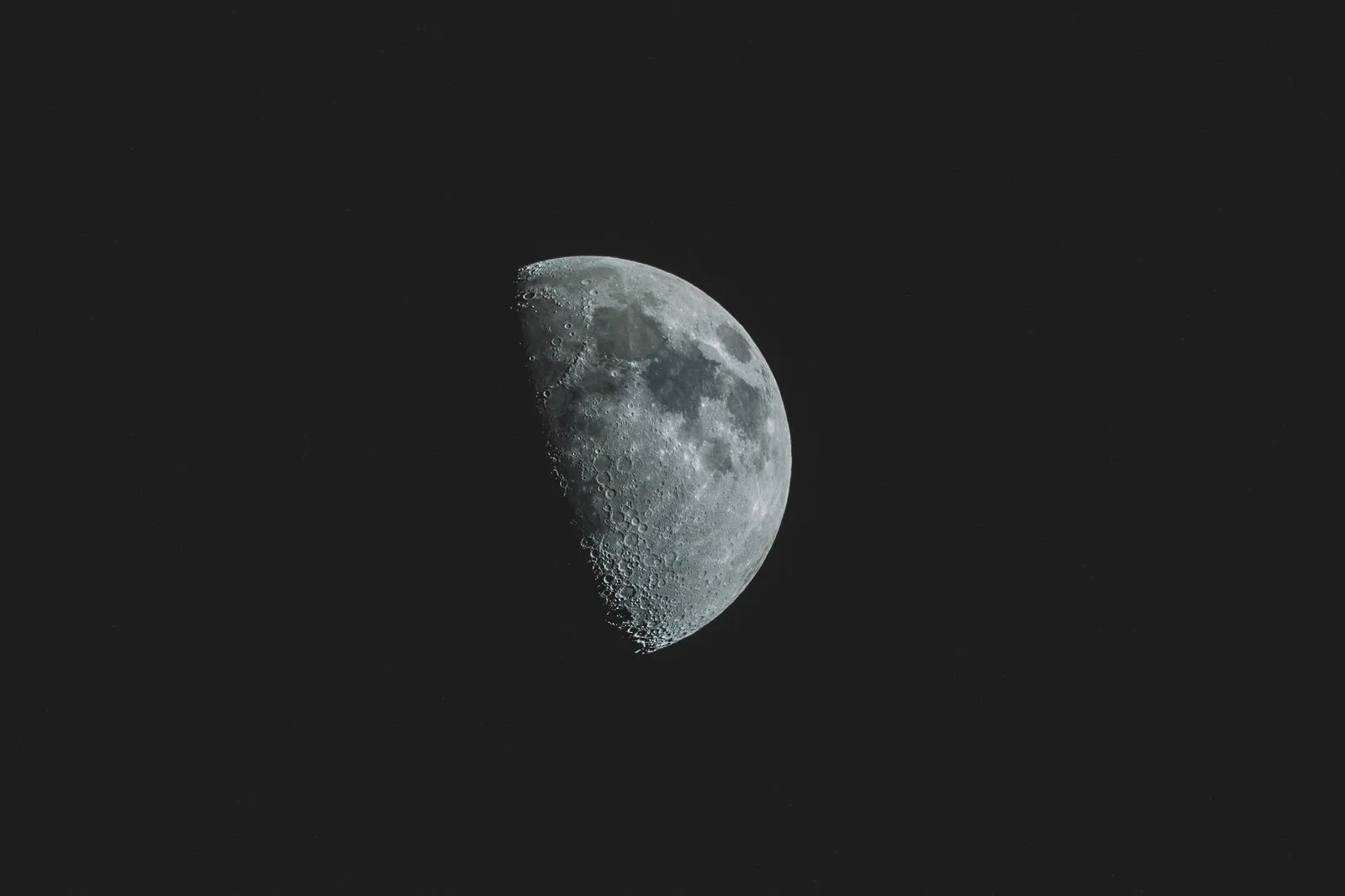
There are 3 scientifically correct facts: the Moon influences life in terms of time, ideas and light. For many animals, especially birds, the Moon is essential for migration and navigation. Other species use the lunar cycles to time their reproduction, coinciding with specific phases of the cycle. The tides are one of the best-known effects of the Moon’s influence on Earth — one minute we’re above the water on the shore, the next we’re hit by waves or left submerged. It’s proven that the mass coral spawning on the Great Barrier Reef is triggered by the Moon.
We could go on and on about how other animals and plants react to moonlight, but let’s get back to hair and its myths. This is without a doubt one of the biggest. Some swear that cutting your hair on a waxing moon makes it grow faster; others claim the full moon helps give it more density or volume, or that the new moon strengthens the root while the waning moon weakens the scalp. The relationship between humans/hair and the Moon’s phases has been around since our ancestors. The gravitational pull the Moon exerts on the Earth feeds the belief — not to mention countless cultures, folklore, legends, stories and myths. I’d say it’s become intrinsic when it comes to beliefs in our society, something magical, with power even over our emotions.
So we went digging, and… In the particular case of hair versus the Moon’s phases, and answering the question: the difference the Moon’s gravitational force exerts on hair — or even on the blood circulation in the scalp — is so infinitesimally small that it’s impossible to measure. Which leads us to say that, for all practical purposes, the result is zero. It has no influence!
We respect it, and we give due space to those who believe. As the saying goes, “to want and to believe is to be able.” Scientifically, the answer is NO.
Love, SaL!
P.S. Thanks to my Cherry Jô, who helped me with this research.